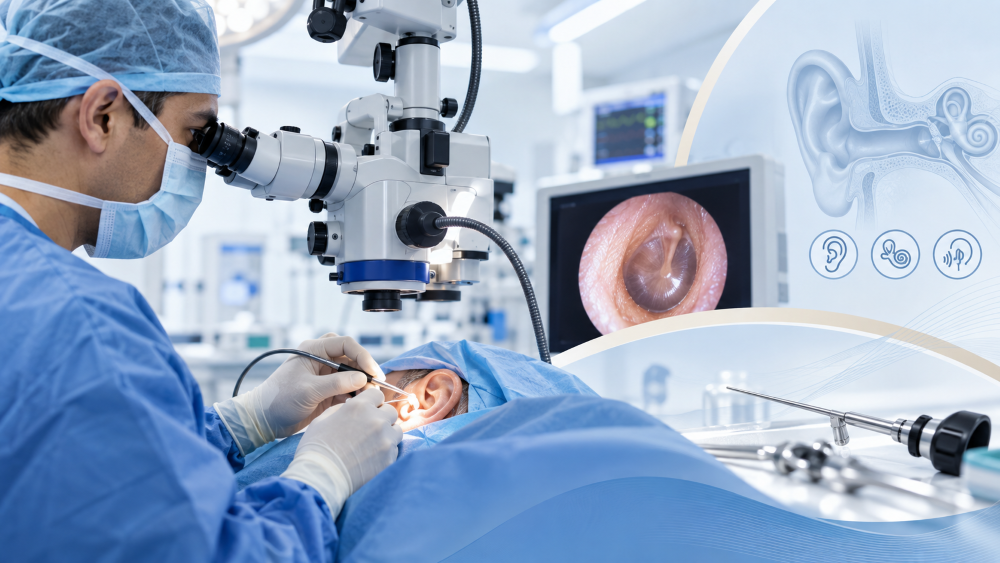
Endoscopic & Microscopic Ear Surgery
Endoscopic and microscopic ear surgery are advanced surgical techniques used to diagnose and treat a wide range of ear conditions with greater precision and visualization. These procedures are commonly performed for problems involving the eardrum, middle ear, ear bones, and chronic ear infections.
Depending on the condition, an ENT specialist may recommend endoscopic ear surgery, microscopic ear surgery, or a combination of both.
What Is Endoscopic Ear Surgery?
Endoscopic ear surgery uses a thin, angled camera called an endoscope to provide a detailed view of the ear canal and middle ear.
The endoscope can offer a wide field of vision and help the surgeon access areas that may be difficult to see with traditional techniques.
Because the endoscope can often be introduced through the natural ear canal, some procedures may require smaller or no external incisions.
What Is Microscopic Ear Surgery?
Microscopic ear surgery uses a high-powered operating microscope to magnify delicate structures inside the ear.
It has been an established technique for many years and remains an important approach for complex ear procedures.
The microscope provides excellent magnification and depth perception, allowing the surgeon to work carefully around tiny structures.
Conditions Treated with Endoscopic & Microscopic Ear Surgery
These advanced techniques may be recommended for several ear problems, including:
The appropriate surgical approach depends on the location and severity of the disease, hearing status, previous surgeries, and the patient's overall ear health.
Common Types of Ear Surgery
Depending on the diagnosis, endoscopic or microscopic techniques may be used for procedures such as tympanoplasty, mastoid surgery, ossiculoplasty, and other middle-ear reconstruction procedures.
Tympanoplasty is performed to repair a perforated or damaged eardrum and may also help restore hearing.
Mastoid surgery may be needed for chronic infection or cholesteatoma involving the mastoid bone.
Ossiculoplasty focuses on repairing or reconstructing the tiny bones responsible for transmitting sound.
Benefits of Advanced Ear Surgery
Modern endoscopic and microscopic techniques can provide several advantages when appropriately selected. Improved visualization allows the surgeon to identify delicate ear structures and disease more accurately.
What to Expect Before Surgery
Your ENT specialist may perform a detailed examination and advise tests such as pure-tone audiometry, tympanometry, imaging scans, or other investigations.
Recovery After Ear Surgery
Patients may experience temporary discomfort, mild ear blockage, or changes in hearing during the healing period. Follow-up appointments are important.
Patients should keep the ear protected from water as advised, avoid putting anything into the ear without medical advice, and follow all prescribed medications and postoperative instructions.
Why Choose Endoscopic & Microscopic Ear Surgery?
Choosing an experienced ENT surgeon is important because ear surgery involves extremely delicate structures that play a vital role in hearing and balance. Advanced visualization techniques, careful surgical planning, and appropriate postoperative care can contribute to safe and effective treatment.
If you have persistent ear discharge, hearing difficulty, recurrent ear infections, or an eardrum problem, an ENT evaluation can help determine whether advanced ear surgery may be appropriate for you.