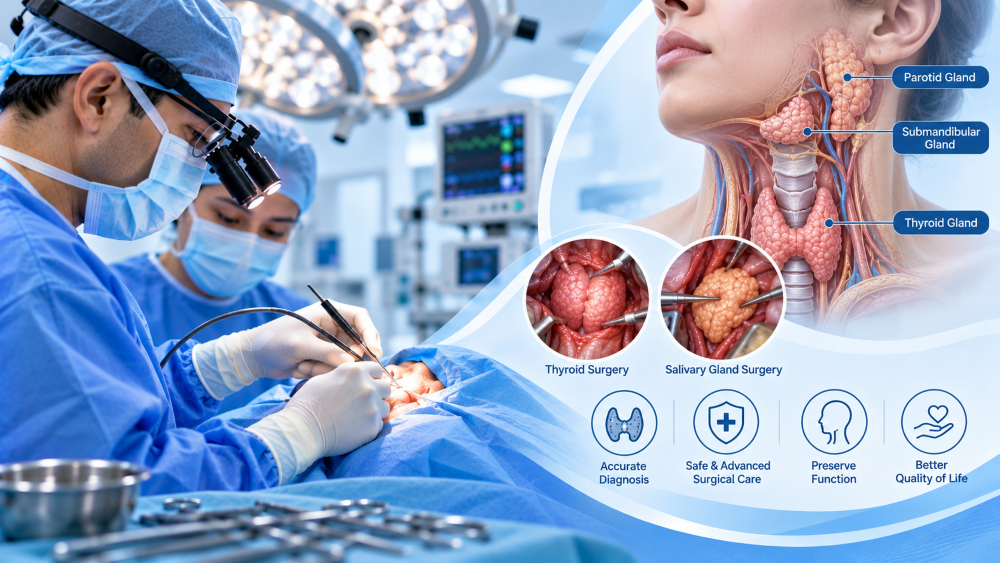
Thyroid Gland & Salivary Gland Surgeries
Thyroid Gland and Salivary Gland Surgeries are specialized head and neck procedures used to treat a wide range of thyroid and salivary gland conditions, including nodules, tumours, cysts, enlargement, obstruction, and recurrent infections. Careful evaluation and precise surgical planning are essential because these glands are located close to important nerves, blood vessels, and other delicate structures.
An experienced ENT and Head & Neck surgeon can determine the appropriate treatment based on the patient's symptoms, examination findings, test results, and diagnosis.
Thyroid Gland Surgery
The thyroid is a butterfly-shaped gland located at the front of the neck. It produces hormones that help regulate metabolism, energy use, and several important body functions.
Thyroid surgery, also known as thyroidectomy, involves removing part or all of the thyroid gland. Depending on the condition, a surgeon may perform a hemithyroidectomy, total thyroidectomy, or another thyroid procedure.
Conditions Treated with Thyroid Surgery
Thyroid surgery may be recommended for conditions such as:
Symptoms requiring evaluation may include a neck lump, difficulty swallowing, breathing discomfort, neck pressure, persistent hoarseness, or visible enlargement in the thyroid region.
Thyroid Surgery Evaluation
Before surgery, the specialist may recommend tests such as thyroid function tests, neck ultrasound, fine-needle aspiration cytology (FNAC), and other imaging or investigations when required.
These assessments help determine whether a thyroid nodule is benign, suspicious, or requires surgical treatment and help the surgeon plan the most appropriate procedure.
Thyroid Function Tests
Thyroid function tests may be performed to assess hormone levels and support treatment planning.
Imaging and FNAC
Neck ultrasound, fine-needle aspiration cytology (FNAC), and other investigations may help assess thyroid nodules.
Salivary Gland Surgery
Salivary glands produce saliva, which helps with digestion, swallowing, and maintaining oral health. The major salivary glands include the parotid, submandibular, and sublingual glands.
Salivary gland surgery may be required to remove a tumour, treat recurrent infection, address obstruction caused by stones, or manage other structural problems.
Conditions Treated with Salivary Gland Surgery
Common indications include:
A persistent or recurrent swelling near the cheek, jaw, or under the tongue should be evaluated by a specialist.
Types of Salivary Gland Surgery
The procedure depends on the affected gland and underlying condition. Parotidectomy involves removing part or all of the parotid gland, while submandibular gland excision removes the affected submandibular gland.
For some salivary gland stones or duct blockages, minimally invasive procedures may be considered to preserve the gland whenever appropriate.
Protecting the Facial Nerve
During parotid surgery, special attention is given to the facial nerve, which passes through the parotid gland and controls facial movement. Careful surgical technique is important to protect this nerve.
Benefits of Specialized Gland Surgery
Modern thyroid and salivary gland surgery focuses on accurate disease removal while preserving important surrounding structures whenever possible. Surgical treatment can relieve pressure symptoms, remove suspicious or cancerous tissue, treat recurrent gland problems, and address obstruction or infection.
In selected patients, minimally invasive techniques may help reduce tissue disruption and support recovery.
Recovery After Surgery
Recovery depends on the type and extent of the procedure. Patients may experience temporary discomfort, swelling, tightness, or difficulty with certain movements during the early healing period.
After Thyroid Surgery
After thyroid surgery, the doctor may monitor thyroid hormone levels and calcium levels when appropriate.
After Salivary Gland Surgery
After salivary gland surgery, follow-up may focus on wound healing, gland function, and nerve function.
Patients should attend scheduled follow-up appointments and follow all postoperative instructions carefully.
Why Choose Specialized Thyroid & Salivary Gland Care?
Thyroid and salivary gland procedures require detailed knowledge of head and neck anatomy and careful handling of nearby nerves and blood vessels. A specialized ENT and Head & Neck surgical team can provide comprehensive evaluation, diagnosis, surgical treatment, and postoperative care.
Early assessment is important when a neck lump, thyroid swelling, persistent salivary gland swelling, difficulty swallowing, or unexplained hoarseness develops. Timely diagnosis can help determine the right treatment and improve the chances of successful management.