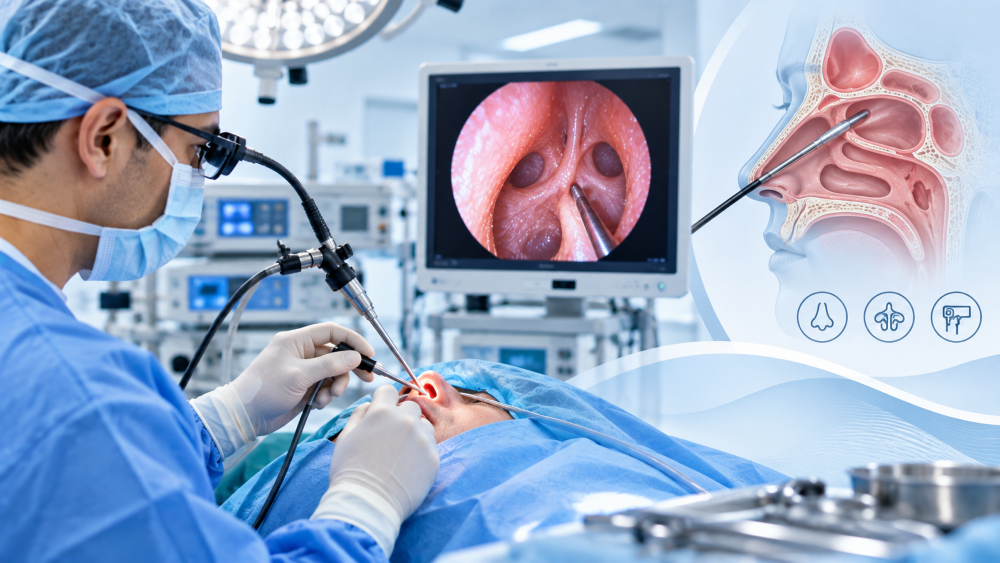
Endoscopic Nose & Paranasal Sinus Surgery
Endoscopic Nose & Paranasal Sinus Surgery (Endoscopic Sinus Surgery) is a minimally invasive surgical technique used to diagnose and treat conditions affecting the nose, nasal passages, and paranasal sinuses. The procedure uses a small endoscope with a camera and specialized instruments to provide a clear view of the nasal and sinus structures, allowing the ENT surgeon to treat disease while preserving as much healthy tissue as possible.
What Is Endoscopic Nose & Sinus Surgery?
During endoscopic sinus surgery, a thin endoscope is gently introduced through the nostrils. The camera provides magnified, high-quality visualization of the nasal cavity and sinus openings. Specialized instruments can then be used to remove obstructive tissue, polyps, infected material, or other abnormalities and improve natural sinus drainage.
Unlike traditional sinus surgery, the procedure is generally performed through the nostrils, so external facial incisions are usually not required.
Conditions Treated with Endoscopic Sinus Surgery
An ENT specialist may recommend endoscopic nose and sinus surgery when medical treatment does not provide adequate relief or when there is significant structural or sinus disease. Common conditions include:
In some cases, endoscopic surgery may also be used to access specific areas around the nose and sinuses for other ENT procedures.
When Is Endoscopic Sinus Surgery Recommended?
Many sinus problems can initially be managed with medicines, nasal sprays, saline irrigation, allergy treatment, and other non-surgical measures. Surgery may be considered when symptoms continue despite appropriate medical treatment, when sinus drainage pathways remain blocked, or when complications or significant anatomical abnormalities are present.
A detailed nasal examination and, when required, a CT scan of the sinuses can help the ENT specialist understand the extent of disease and plan treatment.
Benefits of Endoscopic Nose & Sinus Surgery
Endoscopic surgery offers a precise and minimally invasive approach to treating many nasal and sinus disorders. The endoscope provides direct visualization of narrow sinus passages, helping the surgeon identify affected areas and work carefully around important surrounding structures.
Recovery and results vary depending on the condition and type of surgery performed.
What Happens During the Procedure?
Endoscopic sinus surgery is usually performed under anesthesia. The surgeon passes the endoscope through the nostril and carefully opens blocked sinus pathways. Diseased tissue, polyps, or other obstructions may be removed as needed.
When required, the procedure may be combined with other nasal surgeries, such as septoplasty or turbinate procedures, to improve airflow and address structural causes of nasal blockage.
Recovery After Endoscopic Sinus Surgery
Recovery varies from patient to patient. Mild nasal congestion, swelling, pressure, or a small amount of blood-tinged discharge can occur during the early healing period.
Postoperative Care
Saline nasal irrigation and prescribed medications may be recommended to support healing and keep the nasal passages clean.
Follow-up visits are important because the ENT specialist may need to examine and clean the healing nasal passages. Patients should follow postoperative instructions carefully and avoid strenuous activity for the period advised by their surgeon.
Why Choose Endoscopic Sinus Surgery?
Successful sinus surgery depends on accurate diagnosis, detailed surgical planning, appropriate patient selection, and the experience of the ENT surgeon. Modern endoscopic techniques allow treatment of many sinus conditions through the natural nasal passages while focusing on restoring normal drainage and preserving healthy anatomy.
People experiencing persistent nasal blockage, facial pressure, recurrent sinus infections, reduced sense of smell, or chronic nasal discharge should consult an experienced ENT specialist for evaluation. Endoscopic Nose & Paranasal Sinus Surgery may provide an effective treatment option when medication alone is not sufficient.