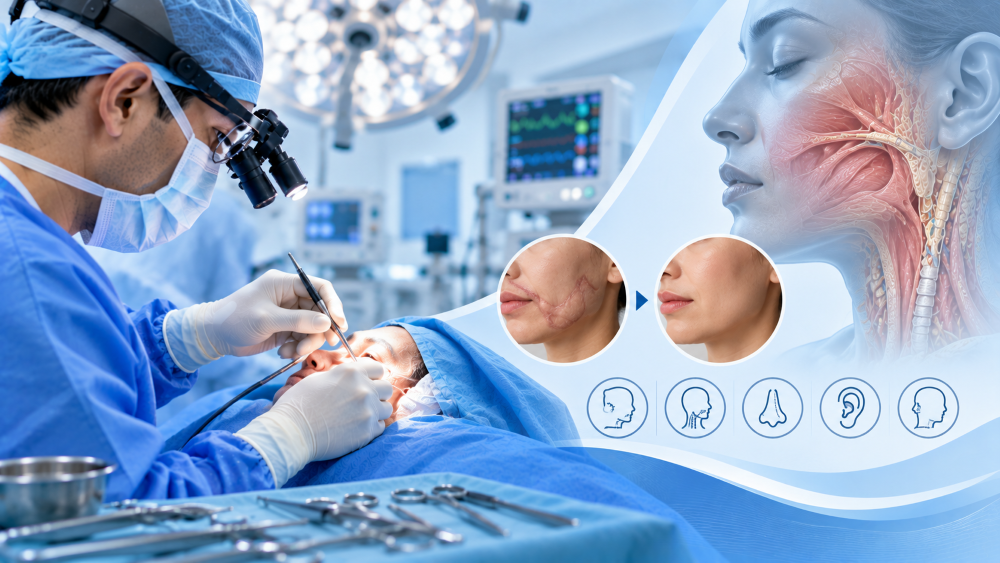
Reconstructive Surgery
Reconstructive Surgery is a specialized surgical approach used to restore the form and function of body structures affected by injury, disease, birth conditions, tumour removal, or previous surgery. In head and neck care, reconstructive surgery is often an important part of treatment after procedures that remove tumours or severely damaged tissue.
The primary goal is not only to restore appearance but also to help patients breathe, speak, swallow, chew, and return to everyday activities as effectively as possible.
What Is Reconstructive Surgery?
Reconstructive surgery involves repairing or rebuilding tissues that have been damaged or removed. Depending on the condition, reconstruction may involve skin, muscle, cartilage, bone, or other soft tissues.
In head and neck surgery, reconstruction can be performed immediately after removal of a tumour or other diseased tissue, or it may be planned as a later procedure. The surgical technique is selected according to the location, size, and complexity of the defect.
When Is Reconstructive Surgery Needed?
Reconstructive surgery may be recommended in several situations, including:
Each patient's reconstruction plan is carefully tailored to their medical condition and functional requirements.
Reconstruction After Cancer Surgery
Head and neck cancer surgery can sometimes require removal of a significant amount of tissue. Reconstruction may be performed during the same operation to restore the affected area.
Depending on the defect, surgeons may use tissue from nearby areas or transfer tissue from another part of the body. This can help rebuild the lining of the mouth, throat, skin, jaw, or other structures while aiming to restore important functions.
Types of Reconstructive Techniques
The appropriate technique depends on the location and extent of tissue loss. Common approaches include local tissue rearrangement, skin grafts, regional flaps, and free flap reconstruction.
Local and Regional Reconstruction
Common approaches include local tissue rearrangement, skin grafts, and regional flaps selected according to the location and extent of tissue loss.
Free Flap Reconstruction
A free flap procedure involves transferring tissue along with its blood supply from one part of the body to another. Microsurgical techniques are then used to reconnect the blood vessels at the reconstruction site.
For complex defects, advanced reconstructive methods can provide stable tissue coverage and support functional recovery.
Benefits of Reconstructive Surgery
The goals of reconstruction extend beyond cosmetic improvement. Proper reconstruction may help:
The expected results depend on the underlying condition, extent of surgery, patient's health, and rehabilitation needs.
What to Expect Before Surgery
Before reconstructive surgery, the specialist evaluates the affected area and considers the patient's overall health, previous treatments, and expected functional requirements. Imaging, laboratory tests, and other investigations may be recommended when necessary.
The surgeon will discuss the proposed reconstruction, possible donor site, expected recovery, potential complications, and rehabilitation plan. For complex head and neck reconstruction, treatment may involve a multidisciplinary team of surgeons, oncologists, anesthetists, speech and swallowing specialists, and other healthcare professionals.
Individualized Planning
The specialist considers the affected area, overall health, previous treatments, and expected functional requirements before planning reconstruction.
Multidisciplinary Care
Complex head and neck reconstruction may involve surgeons, oncologists, anesthetists, speech and swallowing specialists, and other healthcare professionals.
Recovery After Reconstructive Surgery
Recovery varies considerably depending on the type and extent of reconstruction. Patients may require wound care, pain management, nutritional support, physiotherapy, or speech and swallowing rehabilitation.
Regular follow-up appointments are important to monitor healing and identify any complications at an early stage. Rehabilitation may continue for several weeks or months depending on the procedure and the functions being restored.
Why Choose Specialized Reconstructive Surgery?
Successful reconstruction requires detailed surgical planning, knowledge of complex anatomy, and an understanding of both functional and aesthetic requirements. Modern reconstructive techniques allow surgeons to restore damaged or missing tissue while focusing on long-term function and appearance.
For patients undergoing major head and neck procedures, reconstructive surgery can be an important part of comprehensive care. Early consultation with an experienced reconstructive and head & neck surgical team can help determine the most suitable approach for achieving functional and aesthetic restoration.