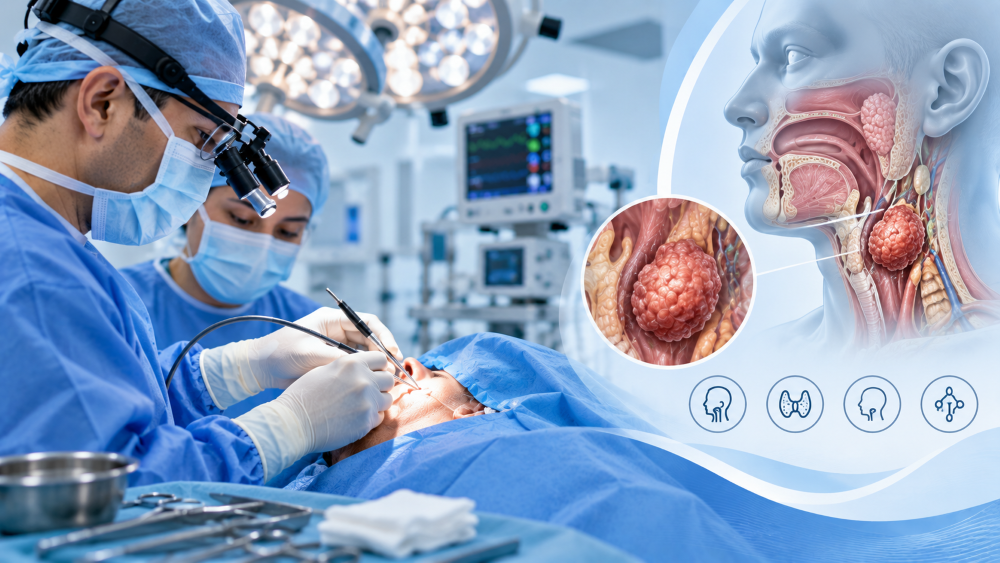
Head & Neck Tumour Surgery
Head & Neck Tumour Surgery is a specialized area of ENT and head and neck care focused on the diagnosis and surgical treatment of tumours affecting the mouth, throat, nose, sinuses, voice box, salivary glands, thyroid, and other structures of the head and neck. Early evaluation and appropriate treatment planning are important for achieving effective disease control while preserving important functions such as breathing, swallowing, speech, and appearance.
What Is Head & Neck Tumour Surgery?
Head and neck tumours can be benign or malignant and may develop in different tissues and organs. Surgery is often an important part of treatment, particularly when a tumour can be safely removed.
Depending on the location and characteristics of the tumour, the surgeon may remove the growth while preserving surrounding healthy structures as much as possible. In selected cases, reconstructive surgery may also be performed to restore function and appearance.
Types of Tumours Treated
Head and neck tumour surgery may be considered for a wide range of conditions, including:
The treatment approach depends on the type, size, location, and stage of the tumour.
Symptoms That Should Not Be Ignored
Some head and neck tumours may initially cause symptoms that resemble common ENT problems. Persistent symptoms should be evaluated by a specialist, particularly when they do not improve.
A new or persistent lump in the neck should receive timely medical evaluation.
Diagnosis and Surgical Planning
Before surgery, a detailed clinical examination is performed. Depending on the suspected tumour, investigations may include endoscopy, ultrasound, CT scan, MRI, PET-CT, or a biopsy.
Biopsy or cytology may help establish the diagnosis, while imaging helps determine the tumour's size, location, and involvement of nearby structures. These findings allow the head and neck team to develop an individualized treatment plan.
Clinical Evaluation
Before surgery, a detailed clinical examination is performed to assess the suspected tumour and related symptoms.
Investigations and Biopsy
Endoscopy, ultrasound, CT scan, MRI, PET-CT, biopsy, or cytology may be recommended to establish the diagnosis and plan treatment.
Surgical Treatment Options
The type of surgery varies according to the tumour. Some tumours can be treated using minimally invasive or endoscopic approaches, while others may require open surgery.
Procedures may include removal of the primary tumour, neck dissection for affected lymph nodes, salivary gland surgery, thyroid surgery, or laryngeal and other head and neck procedures. In selected patients, reconstructive surgery using tissue from another part of the body may be required after tumour removal.
Benefits of Advanced Head & Neck Surgery
Modern head and neck surgery aims to achieve effective tumour removal while preserving vital structures whenever medically possible. Careful surgical planning may help protect functions such as speech, swallowing, breathing, and facial appearance.
For some patients, surgery is combined with radiotherapy, chemotherapy, immunotherapy, or targeted therapy as part of a multidisciplinary cancer treatment plan.
Recovery After Head & Neck Tumour Surgery
Recovery depends on the location and extent of surgery and the patient's overall health. Some patients may temporarily experience difficulty swallowing, speech changes, pain, swelling, or changes in sensation.
Postoperative Rehabilitation
Postoperative rehabilitation can be an important part of recovery after head and neck tumour surgery.
Supportive Care
Depending on the procedure, patients may benefit from speech and swallowing therapy, nutritional support, physiotherapy, and regular follow-up examinations.
Why Choose Specialized Head & Neck Tumour Care?
Head and neck tumour surgery requires detailed knowledge of complex anatomy and careful coordination between different medical specialists. An experienced team can assess the tumour comprehensively and recommend treatment based on the patient's individual condition.
Timely consultation is especially important when symptoms persist or a new lump or growth develops in the head or neck. Early diagnosis, appropriate staging, and personalized treatment planning can play an important role in achieving the best possible outcome.
If you notice a persistent neck lump, swallowing difficulty, voice change, mouth ulcer, or other unexplained head and neck symptoms, consult an experienced ENT and Head & Neck specialist for a thorough evaluation.