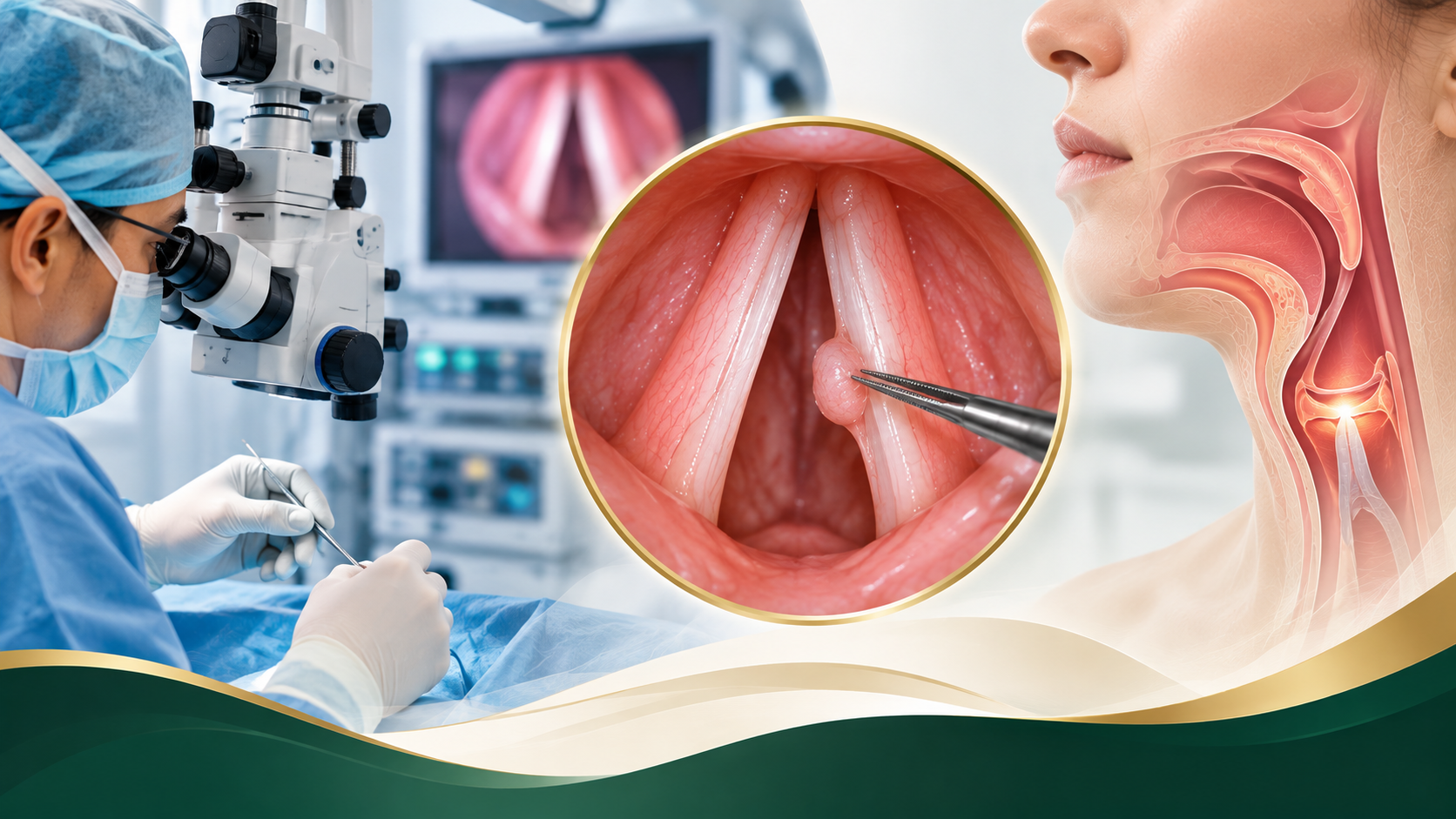
Microlaryngeal Surgery: Advanced Treatment for Vocal Cord Problems
Your voice plays an important role in communication, work, and everyday life. Persistent hoarseness, voice changes, or difficulty speaking may sometimes be caused by problems affecting the vocal cords. When medicines and voice therapy are not enough, Microlaryngeal Surgery may be recommended to diagnose and treat certain vocal cord conditions.
This specialized ENT procedure uses advanced magnification and delicate instruments to treat abnormalities while preserving healthy vocal cord tissue and supporting better voice function.
What Is Microlaryngeal Surgery?
Microlaryngeal Surgery is a minimally invasive procedure used to treat conditions affecting the vocal cords and larynx. The surgeon uses a laryngoscope to access the voice box through the mouth. A microscope or high-resolution visualization system provides detailed magnification of the vocal cords.
Because the vocal cords are delicate structures, the procedure focuses on removing or treating abnormal tissue while protecting the surrounding healthy tissue that is important for normal voice production.
Advanced Magnification
A microscope or high-resolution visualization system provides detailed magnification of the vocal cords and larynx.
Vocal Cord Preservation
The procedure focuses on treating abnormal tissue while protecting the healthy structures important for normal voice production.
When Is Microlaryngeal Surgery Needed?
Not every voice problem requires surgery. Depending on the cause, an ENT specialist may initially recommend voice therapy, medicines, vocal rest, or other conservative treatments.
Microlaryngeal surgery may be considered for conditions such as:
A detailed examination of the larynx, often using flexible or rigid laryngoscopy, helps determine the cause of the voice problem and whether surgery is appropriate.
How Is Microlaryngeal Surgery Performed?
Microlaryngeal surgery is generally performed under general anesthesia. The surgeon carefully introduces a laryngoscope through the mouth to obtain access to the larynx and vocal cords.
Using a microscope or specialized visualization system, very fine instruments are used to remove or treat the abnormal tissue. The surgeon aims to preserve the delicate layers of the vocal cords as much as possible.
In some cases, the removed tissue may be sent for laboratory examination to establish an accurate diagnosis.
Access Through the Mouth
A laryngoscope is introduced through the mouth to provide access to the larynx and vocal cords.
Laboratory Examination
In some cases, removed tissue may be sent for laboratory examination to establish an accurate diagnosis.
What Are the Benefits?
When appropriately recommended, microlaryngeal surgery can help address the underlying structural problem affecting the voice.
Potential benefits include:
The outcome depends on the underlying condition, the extent of the lesion, and the patient's healing and voice use after surgery.
Recovery After Microlaryngeal Surgery
After surgery, your ENT specialist may recommend a period of voice rest. The duration depends on the procedure and the condition being treated. Temporary throat discomfort, mild swallowing discomfort, or changes in voice can occur during the early recovery period.
Voice Rest
A period of voice rest may be recommended after surgery, with the duration determined by the procedure and condition being treated.
Voice Therapy
In selected cases, speech or voice therapy may be recommended to support healing and achieve the best possible vocal outcome.
Following your surgeon's instructions is important. In selected cases, speech or voice therapy may be recommended to help achieve the best possible vocal outcome and reduce the risk of recurring voice problems.
Avoiding smoking and excessive voice use can also support healing.
Is Microlaryngeal Surgery Safe?
Microlaryngeal surgery is a well-established procedure when performed by an experienced ENT or laryngeal surgeon. However, as with any surgery, potential risks can include bleeding, infection, dental or throat injury, scarring, recurrence of a lesion, or persistent voice changes.
Your doctor will evaluate your symptoms, vocal cord findings, overall health, and treatment options before recommending surgery.
Individualized Surgical Planning
Your doctor will evaluate your symptoms, vocal cord findings, overall health, and treatment options before recommending microlaryngeal surgery.
When Should You See an ENT Specialist?
Persistent hoarseness or voice change, particularly when it lasts for several weeks, should not be ignored. An ENT specialist can examine the vocal cords and identify whether the problem is related to inflammation, vocal misuse, a benign lesion, or another condition requiring treatment.
Microlaryngeal Surgery for Vocal Cord Problems
Microlaryngeal Surgery provides a precise and minimally invasive approach to treating selected vocal cord and laryngeal problems. With detailed visualization and delicate surgical techniques, the procedure aims to treat abnormal tissue while preserving healthy vocal cord structures.
If you are experiencing persistent hoarseness, vocal fatigue, or other voice changes, consult an experienced ENT specialist for a proper evaluation and personalized treatment plan.