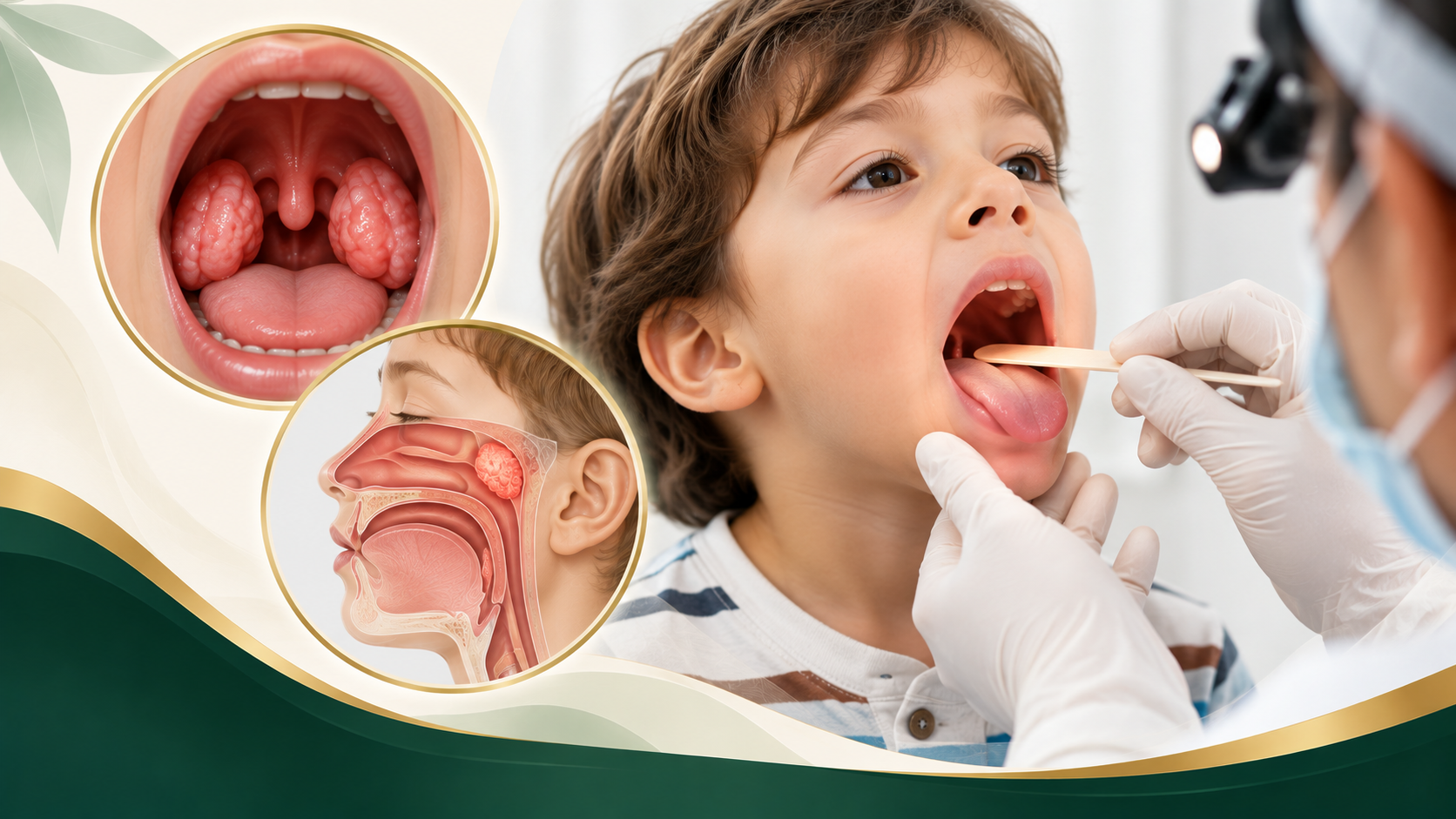
Tonsils and Adenoids: When Should Children Consider Surgery?
Tonsils and adenoids are part of the immune system and help the body recognize and respond to infections. However, in some children, enlarged or repeatedly infected tonsils and adenoids can cause problems with breathing, sleep, swallowing, hearing, or overall quality of life.
When these problems become persistent or significantly affect a child's health, an ENT specialist may recommend tonsil and adenoid surgery.
What Are Tonsils and Adenoids?
Tonsils are two small areas of tissue located at the back of the throat. Adenoids are a similar type of tissue located higher behind the nose, where the nasal passages meet the throat.
Both are involved in the body's immune defenses. They are particularly active during childhood and often become smaller as children grow older.
Tonsils
Tonsils are two small areas of tissue located at the back of the throat and are involved in the body's immune defenses.
Adenoids
Adenoids are similar tissue located behind the nose, where the nasal passages meet the throat.
When Might Surgery Be Recommended?
Enlarged tonsils or adenoids do not automatically mean that surgery is necessary. Many children can be managed with observation, medicines, and appropriate treatment for infections or allergies.
An ENT specialist may consider surgery when enlarged or frequently infected tissues cause significant or recurring problems, such as:
The decision depends on the child's symptoms, medical history, examination findings, and the impact on daily life.
Tonsils, Adenoids, and Sleep Problems
One of the most important reasons children may need evaluation is sleep-disordered breathing.
Large tonsils and adenoids can narrow the airway during sleep. Parents may notice loud snoring, restless sleep, mouth breathing, unusual sleeping positions, or pauses in breathing.
Poor-quality sleep may contribute to daytime tiredness, difficulty concentrating, behavioral changes, or problems with learning. Children showing signs of obstructive sleep apnea should be evaluated by an ENT specialist.
What Is Tonsil and Adenoid Surgery?
Tonsillectomy is the surgical removal of the tonsils, while adenoidectomy removes the adenoids. When both are removed during the same procedure, it is commonly called tonsillectomy and adenoidectomy (T&A).
The procedure is generally performed under general anesthesia. The surgeon accesses the tonsils and adenoids through the mouth, so there are usually no external skin incisions.
Depending on the child's condition, the surgeon may recommend removal of the tonsils, adenoids, or both.
Tonsillectomy
Tonsillectomy is the surgical removal of the tonsils.
Adenoidectomy
Adenoidectomy removes the adenoids. Both procedures may be performed together as tonsillectomy and adenoidectomy (T&A).
What Can Parents Expect After Surgery?
Children may experience a sore throat, difficulty swallowing, reduced appetite, or temporary changes in voice after surgery. Recovery varies, and parents should carefully follow the ENT surgeon's instructions regarding fluids, food, medicines, activity, and follow-up.
Adequate hydration is particularly important during recovery.
Warning Signs After Surgery
Parents should also be aware of warning signs such as significant bleeding, difficulty breathing, or inability to maintain adequate fluid intake and seek urgent medical attention if they occur.
Does Every Child With Enlarged Tonsils Need Surgery?
No. Enlarged tonsils or adenoids alone are not always a reason for surgery. Some children have large tonsils without significant symptoms and may simply need monitoring.
An ENT specialist considers the frequency and severity of infections, breathing and sleep symptoms, hearing problems, swallowing difficulties, and the child's overall quality of life before recommending surgery.
Observation
Some children with enlarged tonsils or adenoids and no significant symptoms may simply need monitoring.
Individual Assessment
The treatment decision is based on symptoms, medical history, examination findings, and the child's overall quality of life.
When Should Parents Consult an ENT Specialist?
Parents should consider an ENT evaluation if their child has persistent snoring, mouth breathing, repeated throat infections, difficulty swallowing, recurrent ear problems, or breathing pauses during sleep.
Early evaluation can help identify whether the symptoms are caused by enlarged tonsils and adenoids or another condition.
Tonsil and Adenoid Surgery for Children
Tonsil and adenoid surgery can provide significant relief for carefully selected children with recurrent infections, airway obstruction, sleep-disordered breathing, or related ear and nasal problems. However, surgery is not necessary for every child with enlarged tonsils or adenoids.
A pediatric ENT specialist can assess your child's symptoms and recommend the most appropriate treatment based on their individual needs.